
TLIF Surgery in Zephyrhills and Lakeland: Minimally Invasive Lumbar Fusion with Dr. Saleh
TLIF Surgery in Zephyrhills and Lakeland: Minimally Invasive Lumbar Fusion Explained
Summary
Transforaminal Lumbar Interbody Fusion (TLIF) is a minimally invasive spine surgery used to stabilize the spine and relieve nerve compression caused by conditions such as herniated discs, spinal stenosis, spondylolisthesis, and degenerative disc disease. Dr. Saleh, a spine surgeon serving Zephyrhills and Lakeland, specializes in minimally invasive TLIF surgery to help patients relieve pain, restore spinal stability, and return to normal activity. Patients in Zephyrhills, Lakeland, Dade City, and Plant City may benefit from TLIF surgery when conservative treatments fail.
What Is TLIF Surgery?
TLIF stands for Transforaminal Lumbar Interbody Fusion. It is a specialized spine surgery designed to stabilize the lower spine by removing a damaged disc and replacing it with a spacer implant, while securing the spine using screws and rods.
This procedure eliminates painful motion between vertebrae and relieves pressure on compressed spinal nerves.
Patients in Zephyrhills, Lakeland, Dade City, and Plant City often consider TLIF surgery after months or years of chronic back pain that has not improved with physical therapy, injections, or medications.
According to the North American Spine Society, spinal fusion procedures like TLIF are effective for treating spinal instability and nerve compression when conservative treatments fail.
Conditions TLIF Surgery Treats
TLIF surgery is commonly used to treat several serious spine conditions.
Herniated Disc
When a spinal disc ruptures and compresses nearby nerves, it can cause:
• Severe lower back pain
• Leg pain (sciatica)
• Numbness
• Weakness
TLIF removes the damaged disc and stabilizes the spine.
Spondylolisthesis
This occurs when one vertebra slips forward over another, causing instability and nerve compression.
TLIF stabilizes the spine and prevents further slippage.
Spinal Stenosis
Spinal stenosis occurs when the spinal canal narrows, compressing nerves.
Patients in Lakeland, Zephyrhills, Dade City, and Plant City with severe stenosis often benefit from decompression combined with TLIF fusion.
The National Institute of Neurological Disorders and Stroke explains that nerve compression in the spine can cause significant neurological symptoms, including pain, weakness, and loss of mobility.
Degenerative Disc Disease
Over time, spinal discs can deteriorate, causing instability and chronic pain.
TLIF restores stability and relieves nerve irritation.
Symptoms That May Indicate You Need TLIF Surgery
Patients should consult a spine specialist if they experience:
• Chronic lower back pain lasting longer than 3 to 6 months
• Radiating leg pain (sciatica)
• Numbness or tingling in the legs
• Muscle weakness
• Difficulty standing or walking
• Pain that worsens with movement
These symptoms may indicate spinal instability or nerve compression.
How Minimally Invasive TLIF Surgery Works
Dr. Saleh specializes in minimally invasive TLIF surgery for patients in Zephyrhills, Lakeland, Dade City, and Plant City.
The procedure involves:
-
Making a small incision
-
Removing the damaged disc
-
Relieving pressure on compressed nerves
-
Inserting a spacer implant to restore disc height
-
Stabilizing the spine with screws and rods
-
Allowing the bones to fuse together over time
Minimally invasive techniques reduce trauma to surrounding muscles and tissues.
Benefits of Minimally Invasive TLIF Surgery
Compared to traditional open spine surgery, minimally invasive TLIF offers:
• Smaller incisions
• Less muscle damage
• Reduced blood loss
• Lower infection risk
• Faster recovery
• Less postoperative pain
• Improved spinal stability
• Long-term pain relief
Patients in Zephyrhills and Lakeland often experience significant improvement in mobility and quality of life after TLIF surgery.
Why Experience Matters in TLIF Surgery
TLIF surgery requires precision, advanced training, and specialized expertise.
Experienced spine surgeons like Dr. Saleh understand how to:
• Safely decompress spinal nerves
• Restore proper spinal alignment
• Stabilize the spine effectively
• Minimize surgical risks
The American Association of Neurological Surgeons emphasizes that surgical expertise plays a critical role in achieving successful outcomes.
Recovery After TLIF Surgery
Recovery varies depending on the patient and surgical complexity, but most patients experience:
• Significant reduction in nerve pain
• Improved stability
• Increased mobility
• Gradual return to normal activities
Minimally invasive TLIF allows faster recovery compared to traditional open fusion surgery.
Many patients return to light activities within weeks.
When to Consider TLIF Surgery
TLIF surgery may be recommended if:
• Conservative treatments have failed
• Pain interferes with daily life
• Nerve compression causes weakness or numbness
• Spinal instability is present
Patients in Zephyrhills, Lakeland, Dade City, and Plant City should seek evaluation from a spine specialist to determine the best treatment option.
Why Patients in Zephyrhills, Lakeland, Dade City, and Plant City Choose Minimally Invasive TLIF Surgery
Minimally invasive TLIF surgery provides:
• Long-term pain relief
• Improved stability
• Faster recovery
• Improved function and mobility
Advanced surgical techniques allow spine surgeons to achieve excellent outcomes while minimizing disruption to surrounding tissue.
Frequently Asked Questions
How successful is TLIF surgery?
TLIF surgery has high success rates for relieving nerve compression and stabilizing the spine when performed by an experienced spine surgeon.
Is TLIF surgery minimally invasive?
Yes. Many TLIF procedures can be performed using minimally invasive techniques, resulting in faster recovery and less tissue damage.
How long does TLIF recovery take?
Initial recovery typically takes several weeks, with continued improvement over several months as the spine fully heals.
Is TLIF better than traditional fusion surgery?
Minimally invasive TLIF offers many advantages, including faster recovery, less pain, and reduced tissue damage.
Who is a candidate for TLIF surgery?
Patients with spinal instability, nerve compression, spondylolisthesis, or severe disc degeneration may be candidates.
TLIF Spine Surgery Specialist in Zephyrhills and Lakeland
Patients in Zephyrhills, Lakeland, Dade City, and Plant City experiencing chronic back pain or nerve symptoms should consult an experienced spine surgeon to determine if TLIF surgery is appropriate.
Minimally invasive TLIF surgery can stabilize the spine, relieve nerve compression, and restore quality of life.
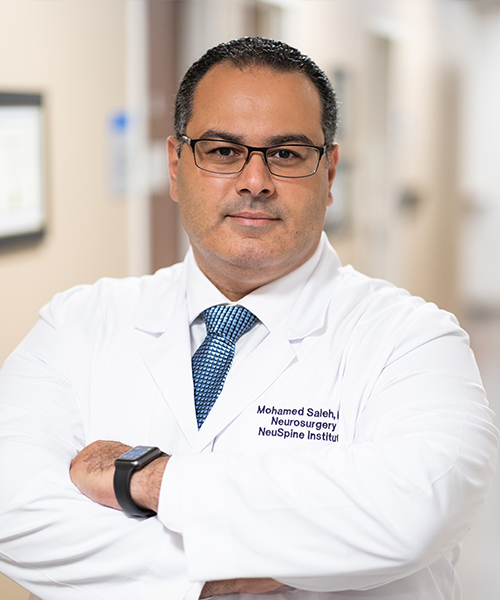
About Dr. Saleh
Dr. Saleh is a spine surgeon at NeuSpine Institute specializing in minimally invasive spine surgery, TLIF lumbar fusion, artificial disc replacement, revision spine surgery, and complex spinal deformity correction. He treats patients in Zephyrhills and Lakeland, Florida, and serves surrounding communities including Dade City and Plant City.
Dr. Saleh focuses on using advanced minimally invasive techniques to relieve nerve compression, stabilize the spine, and help patients return to normal activity with faster recovery and less postoperative pain. He treats conditions including herniated discs, spinal stenosis, spondylolisthesis, radiculopathy, myelopathy, and failed back surgery syndrome.
Patients trust Dr. Saleh for his expertise in complex spine procedures, revision surgery, and personalized treatment plans designed to restore mobility and improve quality of life.
Learn more about Dr. Saleh or request a consultation at NeuSpine Institute in Zephyrhills or Lakeland.
 Revision Spine Surgery in Zephyrhills and Lakeland: What to Do If Your First Spine Surgery Failed