

Revision Spine Surgery in Zephyrhills and Lakeland: What to Do If Your First Spine Surgery Failed
Summary
Revision spine surgery is a specialized procedure performed to correct or improve the results of a previous spine surgery that did not fully resolve symptoms or caused new complications. Patients in Zephyrhills and Lakeland may need revision surgery due to persistent nerve compression, failed spinal fusion, hardware issues, adjacent segment disease, or recurrent disc herniation. Modern minimally invasive revision techniques allow experienced spine surgeons like Dr. Saleh to correct these issues with improved precision, reduced tissue damage, and faster recovery compared to traditional open revision surgery.
When Spine Surgery Does Not Fully Resolve Your Pain
Spine surgery is often life-changing, but in some cases, patients may continue experiencing pain, weakness, numbness, or limited mobility after their initial procedure. This condition is sometimes referred to as Failed Back Surgery Syndrome (FBSS), though the term can be misleading. The original surgery may have been technically successful, but new structural changes or unresolved nerve compression may still cause symptoms.
Patients in Zephyrhills and Lakeland frequently seek Dr. Saleh’s expertise for revision spine surgery when symptoms persist or return months or years after their initial procedure.
Revision spine surgery requires advanced expertise, as the anatomy has already been altered and scar tissue may be present. Surgeons with specialized training in minimally invasive and complex spine reconstruction are best equipped to safely perform these procedures.
Common Reasons Patients Need Revision Spine Surgery
1. Persistent or Recurrent Disc Herniation
Even after a successful discectomy, disc material can re-herniate and compress nearby nerves. This may cause:
• Radiating leg pain (sciatica)
• Numbness or tingling
• Muscle weakness
• Difficulty walking
Revision surgery can relieve pressure on the affected nerve.
2. Failed Spinal Fusion (Nonunion)
Spinal fusion surgery is intended to permanently join two vertebrae. However, in some cases, the bones do not fully fuse, resulting in instability and continued pain.
This is called pseudarthrosis and may require revision fusion surgery to stabilize the spine.
3. Scar Tissue Causing Nerve Compression
Scar tissue naturally forms after surgery. In some cases, this tissue can compress nerves and cause:
• Persistent pain
• Burning sensations
• Radiating nerve pain
Minimally invasive revision surgery can relieve this pressure.
4. Hardware Complications
Screws, rods, or implants may loosen, shift, or cause irritation. This can result in:
• Mechanical back pain
• Instability
• Nerve compression
Revision surgery can correct or replace hardware.
5. Adjacent Segment Disease
After spinal fusion, nearby spinal segments may experience increased stress, causing degeneration over time.
This is a common reason patients in Lakeland and Zephyrhills seek revision surgery years after their initial procedure.
Symptoms That May Indicate You Need Revision Spine Surgery
Patients should consult a spine surgeon if they experience:
• Persistent back or neck pain after surgery
• Radiating arm or leg pain
• New or worsening numbness
• Muscle weakness
• Difficulty standing or walking
• Loss of mobility
• Pain that returns after initial improvement
These symptoms may indicate ongoing nerve compression or spinal instability.
Minimally Invasive Revision Spine Surgery: A Modern Approach
Dr. Saleh specializes in minimally invasive revision spine surgery for patients in Zephyrhills and Lakeland.
Compared to traditional open revision surgery, minimally invasive techniques offer:
• Smaller incisions
• Less muscle damage
• Reduced blood loss
• Lower complication rates
• Faster recovery
• Less postoperative pain
Advanced imaging and precision surgical techniques allow Dr. Saleh to correct spinal issues while preserving healthy tissue.
Conditions Commonly Treated with Revision Spine Surgery
Revision spine surgery may treat:
• Failed spinal fusion
• Recurrent disc herniation
• Spinal stenosis
• Nerve compression
• Hardware failure
• Adjacent segment degeneration
• Spinal deformity progression
Why Experience Matters in Revision Spine Surgery
Revision spine surgery is more complex than initial spine surgery. It requires:
• Detailed understanding of altered spinal anatomy
• Advanced surgical planning
• Expertise in minimally invasive techniques
• Precision to avoid nerve injury
Patients in Zephyrhills and Lakeland benefit from consulting a spine specialist experienced in revision procedures to improve outcomes and restore quality of life.
Recovery After Revision Spine Surgery
Recovery varies depending on the procedure performed, but many patients experience:
• Reduced nerve pain
• Improved mobility
• Increased strength
• Better quality of life
Minimally invasive techniques often allow faster recovery compared to traditional open surgery.
When to Seek a Second Opinion in Zephyrhills or Lakeland
Patients who continue experiencing symptoms after spine surgery should seek evaluation from a qualified spine surgeon.
A second opinion can help identify:
• The cause of persistent pain
• Whether revision surgery is necessary
• Alternative treatment options
Early evaluation can prevent symptoms from worsening.
Frequently Asked Questions
How do I know if my spine surgery failed?
Persistent pain, numbness, weakness, or recurring symptoms after surgery may indicate unresolved nerve compression or spinal instability.
Is revision spine surgery more risky?
Revision surgery is more complex, but experienced spine surgeons using minimally invasive techniques can significantly reduce risks.
Can minimally invasive surgery be used for revision spine surgery?
Yes. Many revision procedures can now be performed using minimally invasive techniques, resulting in faster recovery and less tissue damage.
How successful is revision spine surgery?
Success rates depend on the underlying cause, but many patients experience significant pain relief and improved function.
How long is recovery after revision spine surgery?
Recovery varies, but minimally invasive procedures often allow faster healing compared to traditional surgery.
Revision Spine Surgery Specialist in Zephyrhills and Lakeland
Patients in Zephyrhills and Lakeland experiencing ongoing symptoms after spine surgery should consult an experienced spine surgeon to determine the cause and explore treatment options.
Revision spine surgery can correct underlying issues, relieve nerve compression, and restore function when performed by a qualified specialist.
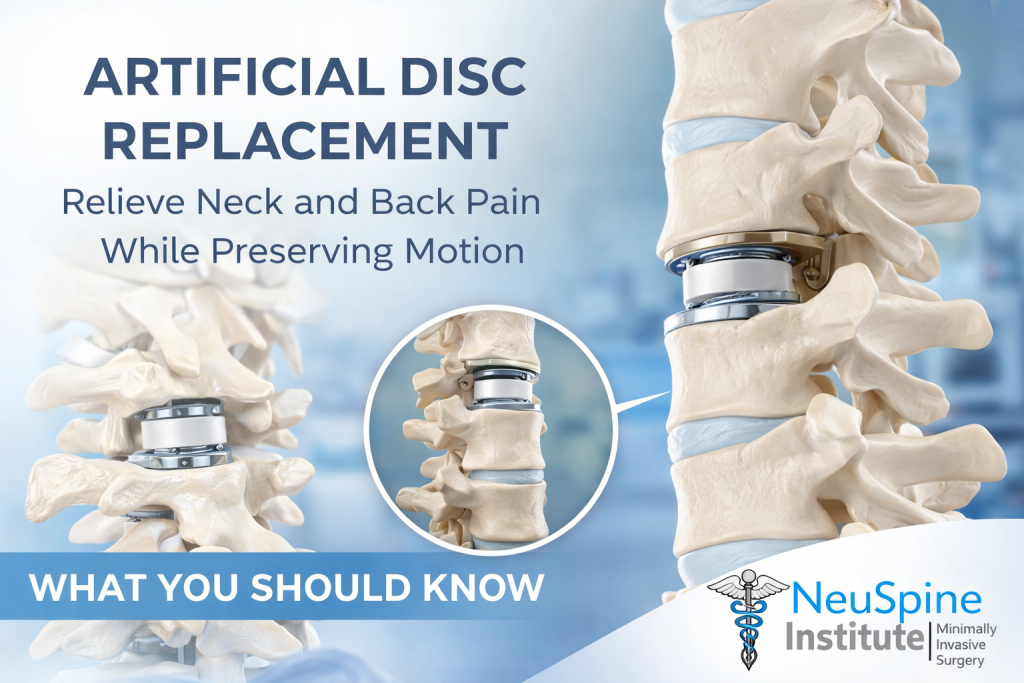 Artificial Disc Replacement in Tampa: A Motion Preserving Option for Neck and Back Pain
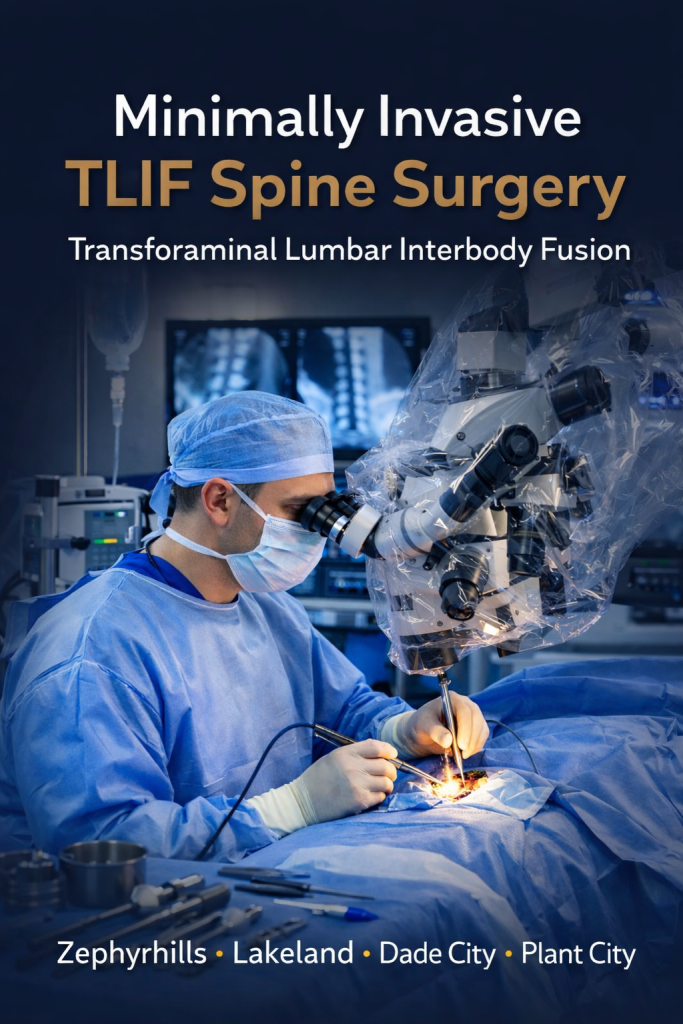 TLIF Surgery in Zephyrhills and Lakeland: Minimally Invasive Lumbar Fusion with Dr. Saleh